Maid, Helper or Cleaner Services in Singapore: Expat Guide 2026
One thing that surprises many newcomers to Singapore is how common it is to have help at home.
Whether you're a single professional, couple or family, you generally have two options:
1. Hire a full-time live-in domestic helper
2. Hire a part-time cleaner by the hour
The cost, responsibilities and way each arrangement works are very different.
Below is a simple guide to maids, domestic helpers and cleaners in Singapore for expats.
For more housing and rental related guides, please click here.

1. Live-In Domestic Helpers in Singapore
Often called a helper in Singapore, the official term is Migrant Domestic Worker (MDW) or simply domestic helper.
Having a live-in helper is very common in Singapore, particularly among households with children, pets, parents or demanding work schedules.
A helper normally lives in your home and works exclusively for your household.
What Does a Domestic Helper Usually Do?
The exact job should be agreed before hiring, but a typical helper may handle:
Cleaning the home
Laundry and ironing
Cooking
Grocery shopping
Washing dishes
General household organisation
Childcare
School drop-offs or pick-ups
Elder care
Pet care
Some helpers specialise more heavily in babies, young children, elderly care or cooking, while others are primarily hired for general household work.
It's important to discuss expectations clearly before hiring rather than assuming every helper performs the same duties.
How Much Does a Maid or Helper Cost in Singapore?
In 2026, a basic domestic helper salary in Singapore commonly falls around:
S$650–S$950+ per month
Experienced helpers, especially those with strong childcare, infant-care, elder-care or cooking experience, may ask for more.
Singapore itself does not impose one universal minimum salary for domestic helpers, although source-country requirements may apply. Market salary expectations also vary substantially based on experience.
But salary isn't your only expense, for many employers, the budget looks roughly like:
Helper salary: S$650–S$950+
Monthly government levy: S$300
Food and household expenses: roughly S$200–S$300+
Insurance and medical costs: additional
Extra rest-day pay: if applicable
For many households, a realistic total budget is therefore around S$1,100–S$1,600+ per month.
The standard levy is currently S$300 per month for a first helper. Qualifying households with certain caregiving needs may receive a concessionary levy of S$60 per month.
What About Upfront Costs?
Hiring a live-in helper also involves setup expenses.
These can include:
Work Permit fees
Medical insurance
Personal accident insurance
Security bond
Medical examinations
Travel costs for overseas hires
Recruitment or placement costs, if applicable
The Work Permit application and issuance fees together are relatively small, but insurance, recruitment and overseas processing can make the initial cost considerably higher.
For non-Malaysian helpers, employers must also arrange a S$5,000 security bond. This is a guarantee rather than necessarily S$5,000 paid directly in cash to the government.
Employers must also provide medical insurance with at least S$60,000 annual coverage for inpatient care and day surgery.
Does the Helper Need Her Own Room?
Your helper needs safe accommodation with adequate space and privacy.
A separate helper's room is ideal and is very common in Singapore condos and landed homes.
If you're planning to hire a helper, this is worth checking before signing a tenancy agreement.
Employers are also responsible for adequate food, accommodation and medical care.
What Are Rest Days Like?
A domestic helper is entitled to one rest day per week.
The employer and helper can mutually agree on the arrangement.
If the helper agrees to work on certain rest days, additional compensation is required. However, at least one rest day every month cannot be exchanged for additional pay.
Having these expectations clear from the beginning makes the arrangement much easier for everyone.
Can Your Helper Work Somewhere Else?
Generally, no.
Your domestic helper can only work for you and normally only perform domestic duties at the residential address registered for her Work Permit.
You cannot send your helper to:
Clean a friend's apartment
Regularly clean another property you own
Work at your office
Help at your restaurant or shop
Work part-time for another household
Even if she agrees and is paid extra, this can still be considered illegal deployment.
There are limited exceptions for caregiving at a relative's home, but specific conditions and notification requirements apply.
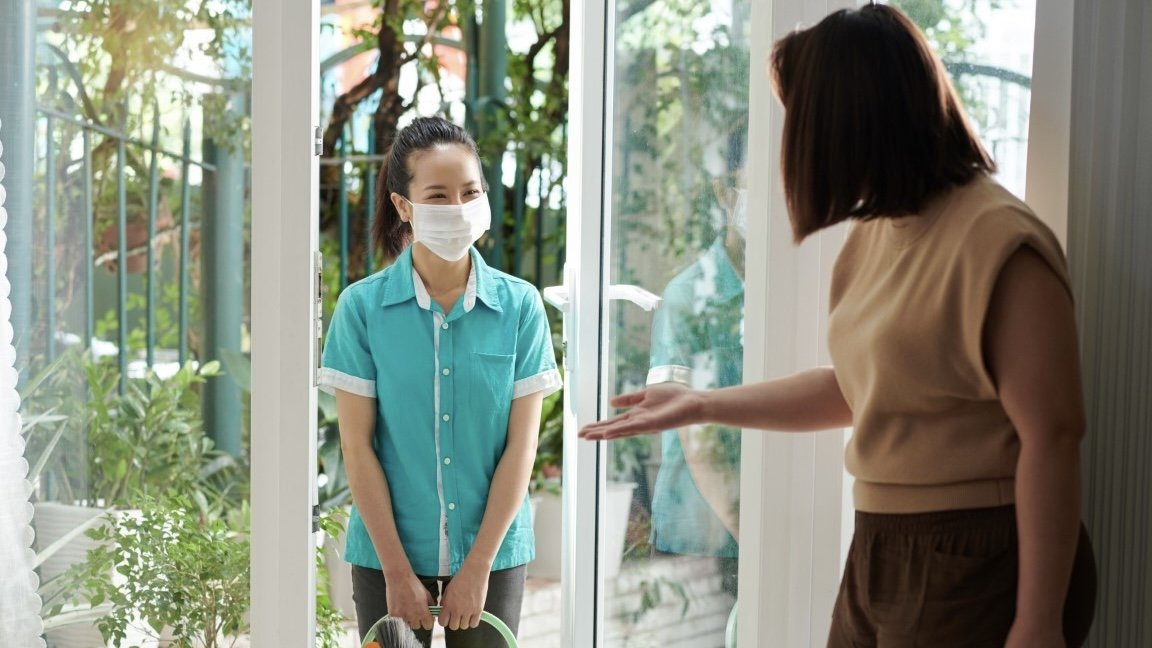
2. Part-Time Cleaners in Singapore
If you're single, a couple, travel frequently or simply don't need someone living with you, a part-time cleaner in Singapore may make much more sense.
Instead of employing someone full-time, you book cleaning for a few hours at a time.
How Much Does a Part-Time Cleaner Cost?
In 2026, a normal range is roughly:
S$20–S$35+ per hour
A typical cleaning session lasts around 3–4 hours.
That means you might spend approximately:
3-hour clean: S$60–S$105+
4-hour clean: S$80–S$140+
Weekly cleaning: roughly S$250–S$500+ per month
Prices depend on home size, frequency, weekends, whether the cleaner is recurring and whether you need standard or deep cleaning. Current 2026 market pricing generally falls within this range.
What Does a Part-Time Cleaner Normally Do?
Standard cleaning generally includes things such as:
Vacuuming
Mopping
Cleaning bathrooms
Wiping surfaces
Kitchen cleaning
Dusting
Taking out rubbish
Basic laundry or ironing if time allows
Deep cleaning is different.
Cleaning inside ovens, refrigerators, windows, upholstery, heavily stained bathrooms or post-renovation homes may cost more.
If you only need someone once a week to keep a 1-bedroom or 2-bedroom Singapore condo clean, a part-time cleaner is usually much simpler than employing a live-in helper.
Be Careful With Informal Part-Time Helpers
One important rule for new expats:
Do not simply pay someone else's live-in domestic helper to clean your apartment on her day off.
A domestic helper employed by another household generally cannot legally work for you.
Singapore has a regulated Household Services Scheme that allows eligible service companies to employ workers who can legally provide part-time household services to multiple homes.
So when arranging part-time cleaning, make sure the cleaner is legally permitted to perform that work.
Should You Get a Helper or Cleaner?
For a single expat living in a 1-bedroom condo, a cleaner every week or two is usually enough.
For a young couple in a 2-bedroom condo, weekly cleaning is often the easiest arrangement.
For a busy couple who cooks frequently, owns pets or travels often, a helper may become more attractive.
For a family with young children, the convenience of a full-time helper can be significant.
And for households caring for an elderly parent, a helper with caregiving experience may provide much more than simple cleaning.
The right choice depends on how much help you actually need.
Renting a Singapore Condo With a Helper?
If you're planning to employ a live-in helper, consider it before choosing your apartment.
Look for:
A proper helper's or utility room
A second or utility bathroom
Enough ventilation
Kitchen and laundry space
Storage
A practical household layout
Some newer Singapore condos maximise bedroom and living-room space by making utility areas extremely small.
Older condos and larger family apartments can sometimes offer considerably better helper accommodation.
When searching for a Singapore condo for rent as an expat, tell any of our agents early if you plan to have a live-in domestic helper.
It can change which apartments are actually suitable for you.
Need helping finding a rental in Singapore?
You can reach out to us whenever you’re ready:
We look forward to your business.
